Skincare Budgeting: Full Routine Under $75/Month in US (2026)

Anúncios
Achieving a comprehensive and effective skincare routine for under $75 per month in the US is entirely feasible by prioritizing essential products, strategic shopping, and understanding ingredient efficacy for your skin’s needs.
Anúncios
Navigating the world of skincare can often feel like a luxury, with countless products vying for your attention and promising miraculous results. However, achieving an effective and complete skincare regimen doesn’t have to deplete your bank account. This guide on skincare budgeting routine will show you how to curate a full, high-quality routine for under $75 per month in the US, updated for 2026, proving that radiant skin is accessible to everyone.
Understanding Your Skin’s Core Needs
Before diving into product recommendations, it’s crucial to understand the fundamental needs of your skin. A successful routine isn’t about the number of products, but rather the efficacy and suitability of each step for your specific skin type and concerns. Focusing on essentials allows for a more streamlined and budget-friendly approach.
Every skin type, whether oily, dry, combination, or sensitive, benefits from a foundational routine that includes cleansing, treating, moisturizing, and protecting. Identifying your primary concerns, such as acne, hyperpigmentation, or fine lines, will help you select targeted ingredients without overspending on unnecessary items. This personalized approach ensures every dollar spent contributes meaningfully to your skin’s health.
Anúncios
Identifying Your Skin Type
- Oily Skin: Often appears shiny, prone to breakouts, and has visible pores. Look for oil-free, non-comedogenic formulas.
- Dry Skin: Feels tight, flaky, or rough. Requires rich, hydrating ingredients and occlusives to seal in moisture.
- Combination Skin: Oily in the T-zone (forehead, nose, chin) and dry or normal elsewhere. Needs balanced products that address both concerns without over-drying or over-moisturizing.
- Sensitive Skin: Easily irritated, prone to redness, itching, or stinging. Opt for fragrance-free, hypoallergenic products with soothing ingredients.
Once you’ve identified your skin type, you can make informed decisions about product categories. For instance, someone with oily skin might prioritize a salicylic acid cleanser, while dry skin types would benefit more from a cream-based, hydrating cleanser. This initial assessment is the cornerstone of effective skincare budgeting, preventing wasteful purchases.
The Essential Skincare Pillars: Cleanser, Treatment, Moisturizer, SPF
Building an effective skincare routine on a budget hinges on mastering the core four: a gentle cleanser, a targeted treatment, a nourishing moisturizer, and a broad-spectrum SPF. These are non-negotiable for skin health and provide the maximum return on your investment. Each category offers numerous affordable options that deliver excellent results.
Many assume that effective products must come with a hefty price tag, but this is a common misconception. Numerous drugstore brands and even some indie brands offer formulations packed with proven ingredients at a fraction of the cost of their luxury counterparts. The key is to look for active ingredients and avoid excessive packaging or marketing fluff.
Cleansers: The Foundation of Clean Skin
A good cleanser removes dirt, oil, and makeup without stripping your skin’s natural barrier. Look for gentle, pH-balanced formulas. For budget-conscious shoppers, brands like CeraVe, Cetaphil, and La Roche-Posay offer excellent options under $15 that last for months. A single bottle can easily fit into your monthly budget.
Consider a cream cleanser for dry skin, a gel cleanser for oily or combination skin, and a micellar water for sensitive or quick cleansing needs. Avoiding harsh sulfates and fragrances is a good rule of thumb for all skin types, contributing to overall skin health and reducing irritation.
Strategic Shopping: Maximizing Value and Discounts
To keep your skincare budget under $75 a month, smart shopping strategies are indispensable. This involves more than just picking the cheapest product; it means understanding product longevity, seeking out sales, and leveraging loyalty programs. Planning your purchases can lead to significant savings over time.
Never underestimate the power of bulk buying on staples like cleansers or moisturizers if you know they work for you. Many retailers offer discounts for larger sizes, reducing the per-ounce cost. Additionally, signing up for email newsletters from your favorite affordable brands can alert you to flash sales and exclusive promotions.
Where to Find Affordable Skincare
- Drugstores (CVS, Walgreens, Rite Aid): Frequent sales, loyalty programs, and a wide selection of reputable budget brands.
- Mass Retailers (Target, Walmart): Competitive pricing and often carry exclusive value sets or larger product sizes.
- Online Retailers (Amazon, Ulta, Dermstore): Look for daily deals, subscribe-and-save options, and free shipping thresholds.
- Direct-to-Consumer Brands: Companies like The Ordinary, Good Molecules, and Versed offer high-quality ingredients at remarkably low prices.
Always compare prices across different retailers before making a purchase. A quick online search can reveal where a product is currently on sale or if there’s a coupon available. Patience is a virtue in budget skincare; waiting for a sale can save you a substantial amount of money.
Budget-Friendly Product Recommendations (Updated 2026)
Curating a full routine for under $75 requires careful selection of products that deliver efficacy without the premium price tag. Here are some updated recommendations for 2026, focusing on key categories and active ingredients known for their performance.
The beauty market is constantly evolving, with new innovations making effective ingredients more accessible than ever. Don’t be swayed by expensive packaging; focus on the ingredient list. Many affordable brands now formulate with ingredients previously only found in high-end products.
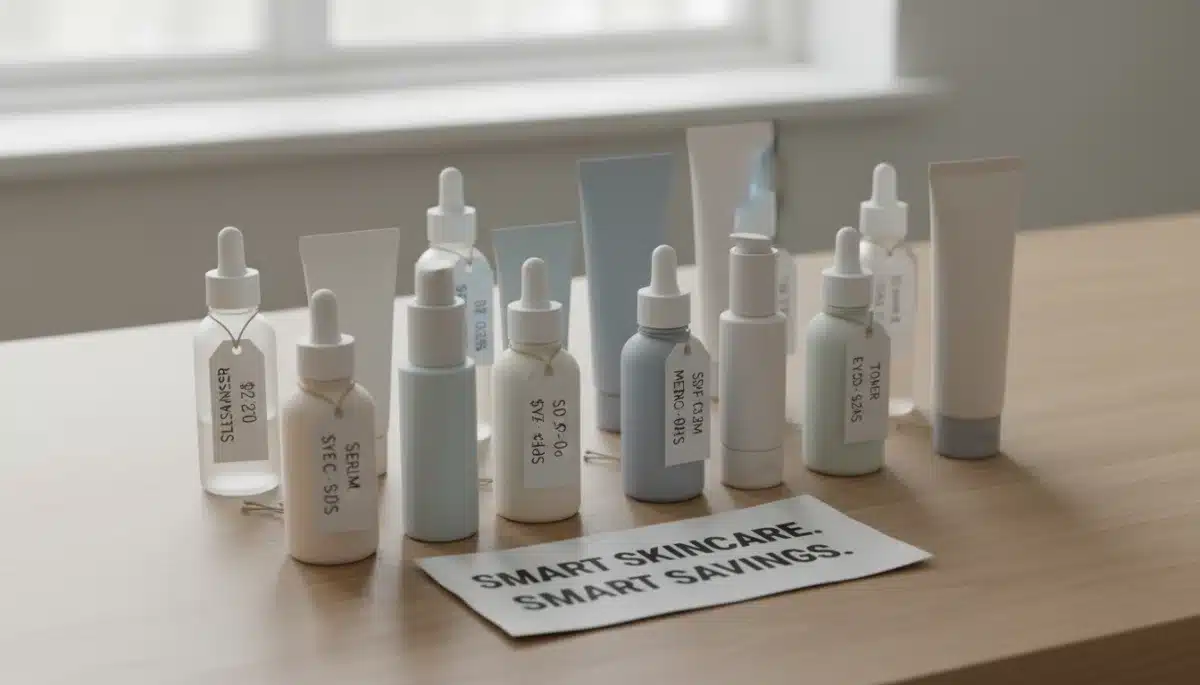
Cleansers (Approx. $10-$15)
- CeraVe Hydrating Facial Cleanser: Gentle, non-foaming, excellent for all skin types, especially dry and sensitive.
- La Roche-Posay Toleriane Purifying Foaming Cleanser: Effective for normal to oily skin, removes impurities without stripping.
- Cetaphil Daily Facial Cleanser: A classic, mild option suitable for most skin types, including sensitive.
Treatments (Approx. $15-$25)
This is where you target specific concerns. Choose one or two active ingredients based on your skin type. Serums are often more concentrated, meaning a little goes a long way, making them cost-effective.
- The Ordinary Niacinamide 10% + Zinc 1%: Great for oil control, redness, and texture.
- Good Molecules Discoloration Correcting Serum: Targets hyperpigmentation and dark spots with Niacinamide and Tranexamic Acid.
- Versed Just Breathe Clarifying Serum: Contains salicylic acid for acne-prone skin.
Remember that consistency is key with treatments. Using a product regularly, even an affordable one, will yield better results than sporadically using an expensive one. Introduce new treatments slowly to avoid irritation.
Moisturizers and SPF: The Protective Duo
No skincare routine is complete without a moisturizer to hydrate and strengthen the skin barrier, and a broad-spectrum SPF to protect against sun damage. These two steps are critical for long-term skin health and anti-aging, and thankfully, many excellent budget-friendly options exist.
Investing in a good SPF is perhaps the most important skincare decision you can make, as it prevents premature aging, hyperpigmentation, and reduces the risk of skin cancer. Don’t skimp on this step, even when on a budget.
Moisturizers (Approx. $10-$20)
- Vanicream Daily Facial Moisturizer: Simple, effective, and free of common irritants, ideal for sensitive skin.
- Neutrogena Hydro Boost Water Gel: Lightweight and deeply hydrating, perfect for oily to combination skin.
- CeraVe Moisturizing Cream: Rich and restorative, excellent for dry and barrier-compromised skin.
SPF (Approx. $10-$20)
Look for broad-spectrum protection with an SPF of 30 or higher. Many brands now offer elegant formulas that don’t leave a white cast or feel greasy, even at lower price points.
- Trader Joe’s Daily Facial Sunscreen SPF 40: A cult-favorite dupe for a much pricier option, offering invisible protection.
- Bondi Sands Sunscreen Lotion SPF 50: Australian brand known for high protection and pleasant textures, increasingly available in the US.
- Black Girl Sunscreen SPF 30: Specifically formulated to be invisible on darker skin tones, widely available.
By combining these affordable essentials, you can construct a robust skincare routine that addresses cleansing, treating, moisturizing, and protecting, all well within the $75 monthly budget. The key is to prioritize and be consistent.
Maintaining Your Budget and Routine Long-Term
Sticking to a skincare budget isn’t a one-time event; it’s an ongoing practice. Regular reassessment of your products, mindful consumption, and staying informed about new, affordable releases are crucial for long-term success. Your skin’s needs may also change with seasons or age, requiring minor adjustments.
Avoid the temptation to constantly try new products. While exciting, this can lead to product overload and wasted money. Stick to what works, and only introduce new items when there’s a genuine need or a well-researched, affordable alternative.
Tips for Long-Term Skincare Budgeting
- Product Longevity: Estimate how long each product lasts. A $15 cleanser that lasts 3 months costs $5/month, while a $10 serum lasting 1 month costs $10/month. Factor this into your monthly allocation.
- Sample Smart: Before committing to a new product, try to get samples. Many brands offer them, or you might find mini-sizes that are cheaper to test.
- DIY with Caution: While some DIY masks can be beneficial, be extremely cautious with active ingredients. Sticking to commercially formulated products ensures stability and safety.
- Understand ‘Use By’ Dates: Skincare products have a shelf life. Using them past their prime can be ineffective or even harmful. Don’t hoard products you won’t use.
By adopting these habits, you can sustain an effective and affordable skincare routine, ensuring your skin remains healthy and happy without financial strain. Consistency and smart choices are your best allies in this journey.
| Key Skincare Component | Budget Strategy |
|---|---|
| Cleanser | Prioritize gentle, large-sized drugstore options (e.g., CeraVe, Cetaphil). |
| Treatment | Focus on one or two targeted ingredients from affordable brands (e.g., The Ordinary, Good Molecules). |
| Moisturizer & SPF | Seek effective, fragrance-free options; SPF is non-negotiable for daily use. |
| Shopping Habits | Leverage sales, loyalty programs, and online retailers for best prices. |
Frequently Asked Questions About Skincare Budgeting
Absolutely! By prioritizing essential products like a cleanser, treatment, moisturizer, and SPF from affordable brands, and adopting smart shopping habits, it’s entirely possible to build a comprehensive and effective routine within a $75 monthly budget in the US.
Focus on core active ingredients like niacinamide for texture and redness, salicylic acid for acne, hyaluronic acid for hydration, and vitamin C for brightening. Many affordable brands offer serums and treatments featuring these powerful ingredients without a high price tag.
Not necessarily. While some high-end products offer unique formulations, many affordable options contain the same effective active ingredients. Often, the higher cost comes from branding, packaging, and marketing, not necessarily superior efficacy. Focus on ingredients and reviews.
Product longevity varies. Cleansers and moisturizers often last 2-3 months, while serums might last 1-2 months. SPF should be replaced every 3 months if used daily. Track your usage to anticipate needs and purchase during sales to maintain your budget effectively.
Yes, a minimalist routine focusing on a good cleanser, moisturizer, and SPF can be highly effective. Adding one targeted treatment for your main concern makes it complete. Overloading your skin with too many products can sometimes lead to irritation and wasted money.
Conclusion
Achieving a radiant and healthy complexion does not require an exorbitant budget. By understanding your skin’s core needs, strategically selecting essential products, and employing smart shopping tactics, a full and effective skincare routine for under $75 per month in the US is not only possible but easily maintainable. Remember, consistency and informed choices are far more impactful than the price tag of individual products. Embrace the power of affordable skincare and unlock your best skin without financial strain.
